TIRTA LESTARI Plants 500 Trees in Kintamani, Engaging Women in Water Source Conservation
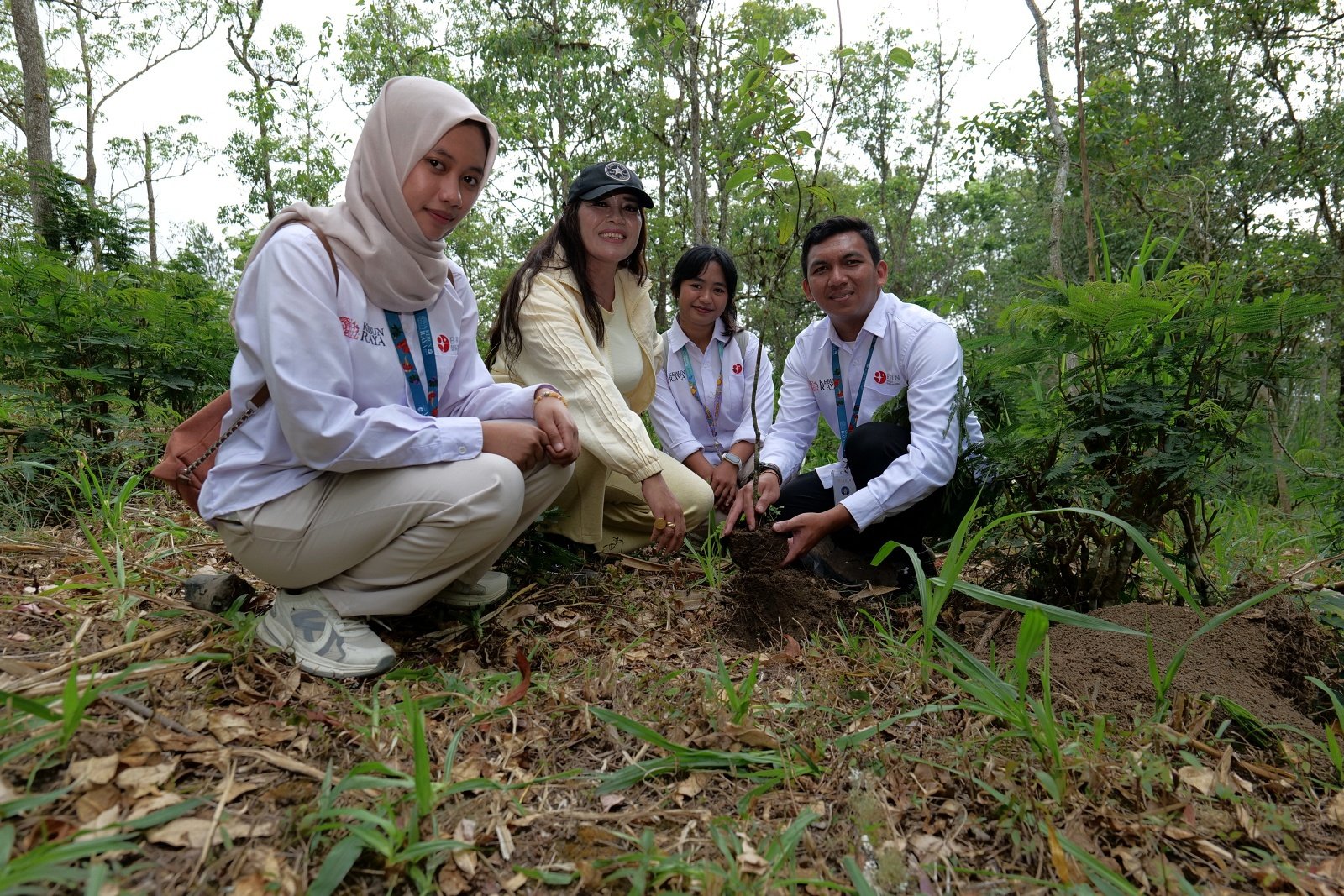
The Director of LBH BWCC joins representatives from BRIN (National Research and Innovation Agency) in a tree-planting activity.
balihbalihan.com - Efforts to protect water sources in the upstream area of Kintamani, Bangli Regency, are being carried out through a conservation initiative that engages women and local communities. Through the TIRTA LESTARI Program (Inclusive Transformation of Restoration and Sustainable Water Governance in Kintamani), 500 conservation and agroforestry tree seedlings were planted in Buahan Village, Kintamani District, on Friday, October 30, 2026.
This planting activity marks the first phase of a target of 3,000 seedlings to be planted gradually across the program's target areas. In addition to increasing vegetation cover and restoring the ecological functions of the upstream area, the initiative aims to protect water catchment areas while promoting agroforestry practices that can generate economic benefits for local communities.
Unlike conventional tree-planting activities that focus primarily on greening, TIRTA LESTARI places community engagement, particularly women's participation, at the heart of conservation governance. Women are involved not only in planting activities but also in planning, maintenance, and monitoring tree growth.
The planting ceremony, held at Balai Banjar Binyan in Buahan Village, was attended by members of women-led conservation groups, local residents, representatives of regional and village governments, security personnel, and other relevant stakeholders.
The program is implemented by LBH Bali Woman Crisis Centre under the CO-EVOLVE 2 project (Strengthen Civic Space and Enhance the Enabling Environment and Capacity of Networked Local CSOs to Promote a Just and Inclusive Green Transition in Indonesia), with co-funding support from the European Union and Yayasan Penabulu.
Through ecosystem restoration, agroforestry development, and stronger community participation, the program promotes a more just and inclusive green transition. The initiative also strengthens the role of civil society organizations in supporting local communities while creating opportunities for women's groups to participate in natural resource management at the local level.
The Head of the Bangli Regency Agriculture, Food Security and Fisheries Office, Ir. I Wayan Sarma, who attended on behalf of the Regent of Bangli, expressed his appreciation for the community's initiative to protect the environment. He emphasized that environmental conservation efforts should go hand in hand with improving community welfare.
"We are committed to supporting environmental conservation efforts. The balance between economic development and environmental sustainability must be maintained to ensure that nature is not excessively exploited for economic gain," said Wayan Sarma.
As a conservation area and one of the water-source areas supplying other regencies and cities across Bali, Bangli has a shared responsibility to protect its natural environment and ensure the availability of water resources. "These efforts require collaboration between the government and communities, while ensuring the well-being of the people who also play a role in protecting the environment," he added.
Protecting the upstream areas of Kintamani requires cross-sectoral collaboration. Local communities, regional and village governments, customary villages (desa adat), security personnel, and relevant authorities all have a role to play in safeguarding the area and preventing activities that could cause environmental damage.
Bangli Police Chief AKBP Anggun Adhika Putra, S.I.K., M.M., expressed his appreciation for the initiative led by LBH Bali Woman Crisis Centre together with all participating stakeholders. He reminded participants that the success of tree-planting activities should not be measured solely by the number of seedlings planted, but also by the commitment to maintaining them.
Wayan Sarma emphasized that tree planting is not merely a ceremonial activity but a long-term investment in the environment and future generations. Challenges such as climate change, erosion, and threats to water availability require collective awareness and concrete action from all stakeholders.
"Through the Green Policing approach, we encourage everyone to work together in protecting the environment, including ensuring that the trees planted today are properly maintained and monitored so they can grow well. We invite the communities of Buahan and Kedisan to remain actively involved in safeguarding environmental sustainability in their villages," he said.
The TIRTA LESTARI Program targets Buahan and Kedisan Villages through an ecosystem-based conservation approach that emphasizes community participation. One of its key initiatives is the establishment and ongoing support of women-led conservation groups in both villages.
The Director of LBH Bali Woman Crisis Centre, Ni Nengah Budawati, said that women's involvement is fundamental to building inclusive natural resource governance. She noted that women play a strategic role in protecting the environment and sustaining water sources, which are essential to the daily lives of local communities.
"Conservation is not simply about planting trees; it is also about strengthening the role of women and local communities as key drivers of sustainable natural resource management. Through TIRTA LESTARI, we encourage active community participation in conservation efforts, from planning to maintenance and monitoring, to ensure the sustainability of water sources as a shared responsibility," she said.
Through these conservation groups, women have greater opportunities to participate in decision-making and environmental management at the village level. They take part in developing group work plans, determining conservation activities, and overseeing plant maintenance and monitoring.
For local communities, this initiative is more than just a greening program. It represents a collective commitment to protecting the environment that sustains their livelihoods.
Ni Wayan Rasmini, a member of a women-led conservation group, said that community involvement is an important step toward protecting water sources for future generations.
"Through this initiative, we want to contribute to protecting the environment and water sources in our villages. Planting trees is the first step, which needs to be followed by taking care of them together so that the benefits can be enjoyed for years to come," said Rasmini.